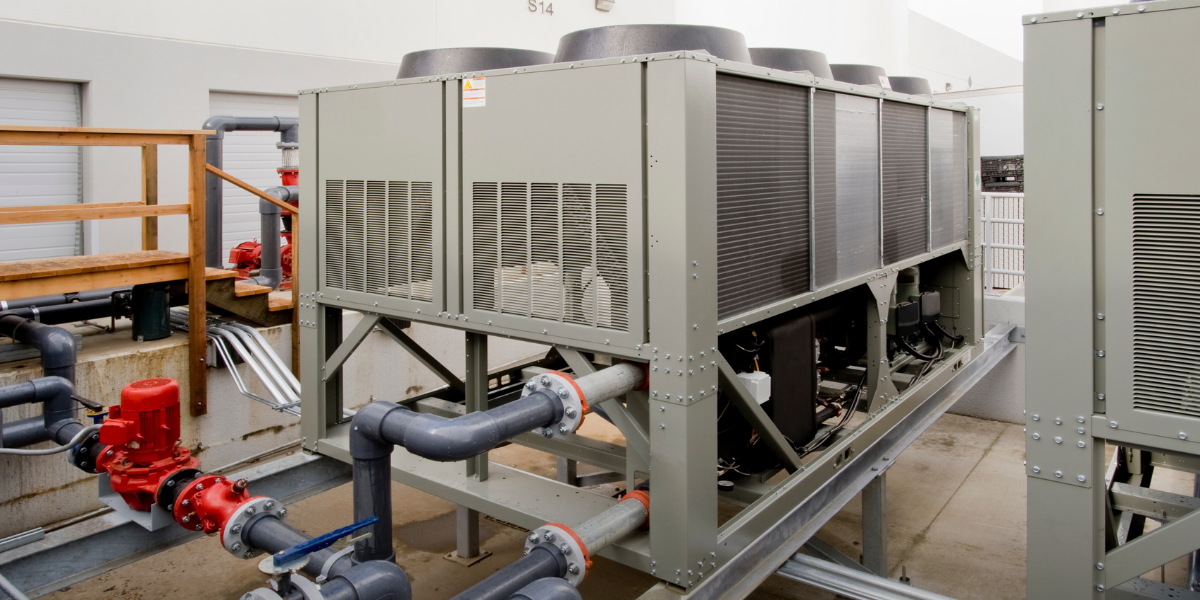
Extrusion Chiller Sizing and Cooling Requirements
An extrusion chiller removes heat from plastic as it moves through the production line. It may also cool the extruder barrel, feed throat, gearbox, vacuum tank, pumps, or other equipment. Proper sizing depends on the material, production rate, water temperature, flow, and total load connected to the chilled-water loop.
What Determines Extrusion Chiller Size?
Material type and throughput provide a starting point. A line producing 500 pounds of polypropylene per hour has a different cooling load than a PVC line running at the same rate.
The main sizing factors are:
- Resin type
- Maximum throughput in pounds per hour
- Melt and required product exit temperatures
- Supply and return water temperatures
- Water flow in gallons per minute
- Extruder screw diameter
- Equipment connected to the chilled-water loop
- Highest plant or outdoor temperature
- fluid type and glycol concentration
Material cooling and machine cooling are separate loads. A throughput calculation may estimate the heat removed from the plastic, but it does not include the barrel, feed throat, gearbox, vacuum pump, or other equipment unless those loads are added.
Only count equipment served by the industrial chiller. Some extrusion lines use separate plant water or cooling-tower water for part of the process.
How to Calculate the Extrusion Cooling Load
Two common methods can provide an initial load estimate. Existing lines can often be measured through water flow and temperature. New lines may require an estimate based on material throughput and equipment data.
Using Water Flow and Temperature
When the process water flow and temperature change are known, calculate the load with:
The inputs are:
- GPM: Water flow in gallons per minute
- 60: Minutes per hour
- 8.33: Approximate weight of one gallon of water in pounds
- Delta T: Return-water temperature minus supply-water temperature
Convert BTU/hr to refrigeration tons:
One refrigeration ton equals 12,000 BTU/hr.
Cold Shot’s general sizing method then multiplies the calculated tonnage by 1.2 to add a 20% sizing allowance before selecting the closest standard chiller size.
Use measurements taken while the line is running at or near its highest planned production rate. Readings taken while the line is idle or running a light product may understate the load. Actual flow should also be measured when possible. Pump ratings do not account for pressure loss through piping, hoses, valves, strainers, tanks, and process equipment.
Using Material Throughput
Cold Shot’s extrusion sizing data provides the following planning estimates:
| Extrusion Material | Approximate Production per Ton of Cooling |
| Polyethylene or polypropylene | 50 lb/hr |
| Polystyrene | 75 lb/hr |
| PVC | 80 lb/hr |
Use this formula:
A polypropylene extrusion line producing 500 lb/hr would have an estimated material load of:
These figures are starting estimates. Resin grade, melt temperature, product shape, wall thickness, line speed, and required exit temperature can change the load.
If the extruder or auxiliary equipment also uses chilled water, add those loads to the material load before rounding up to the closest standard chiller size. Connected equipment may include:
- Barrel or screw cooling
- Feed throat cooling
- Gearbox cooling
- Vacuum sizing tanks
- Vacuum pumps
- Hydraulic equipment
- Air compressors
- Other pumps or heat exchangers
Use equipment manufacturer data when available. General estimates based on motor horsepower or screw diameter are less exact.
Water Temperature, Flow and Glycol
Supply-water temperature is measured as fluid leaves the chiller. Return-water temperature is measured after the fluid absorbs heat from the extrusion process. The difference between the two is the delta T used in the load calculation.
Flow must stay within the limits of the chiller and process equipment. Low flow can reduce heat transfer and cause temperature swings, low-flow alarms, or evaporator freezing. Excess flow can create high pressure drop and strain pumps, hoses, tanks, and heat exchangers.
Colder water does not always provide better results. Chiller capacity often falls as the required leaving-water temperature drops. Cold piping and process surfaces may also collect condensation.
Glycol may be needed when the fluid could reach freezing conditions. It changes heat-transfer performance, viscosity, pump flow, and pressure drop. The glycol type and concentration should be included during sizing instead of added after the chiller is selected.
Information Needed for Chiller Selection
Gather the following operating data before requesting a chiller recommendation:
- Extrusion process and finished product
- Resin type and maximum throughput
- Melt and required product exit temperatures
- Supply and return water temperatures
- Required water flow and pressure
- Equipment connected to the chilled-water loop
- Glycol type and concentration
- Plant location and highest ambient temperature
- Available voltage
- Number of current and planned extrusion lines
Accurate process data gives the chiller manufacturer a better basis for checking capacity, pump size, fluid temperature, and condenser conditions.
Find the Right Extrusion Chiller for Your Process
Cold Shot Chillers manufactures portable and stationary industrial chillers for plastic extrusion cooling. Air-cooled and water-cooled models are available in several capacities, with options for different temperatures, flow rates, pressures, and plant conditions.
Contact Cold Shot Chillers to request a chiller recommendation.