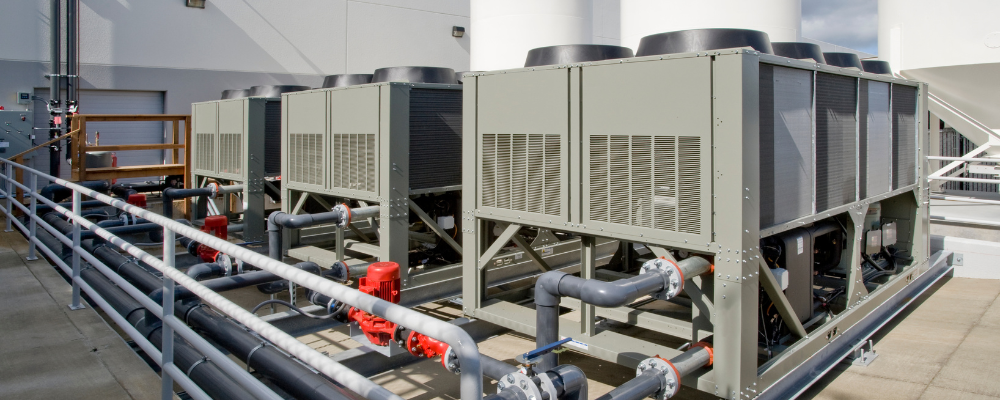
What is a Recirculating Water Chiller & How Does it Work?
Many industrial processes generate heat that must be removed to maintain consistent operation. A recirculating water chiller removes that heat by continuously cooling and recirculating fluid through a closed loop system. These systems are commonly used in manufacturing, processing, packaging, testing, and other industrial applications where temperature control is required. Keep reading to learn more.
What is a Recirculating Water Chiller?
A recirculating water chiller is a self contained cooling system that circulates chilled water or a water/glycol mixture through equipment to remove heat. After absorbing heat from the process, the fluid returns to the chiller, is cooled again, and is sent back out for another cycle.
How Does a Recirculating Water Chiller Work?
The Process Loop: Fluid circulates through the equipment, absorbs heat, and carries it back to the chiller.
The Refrigeration Loop: Refrigerant absorbs heat from the process fluid and rejects it through the condenser.
These two loops work together continuously to remove heat from the process.
The Process Fluid Loop
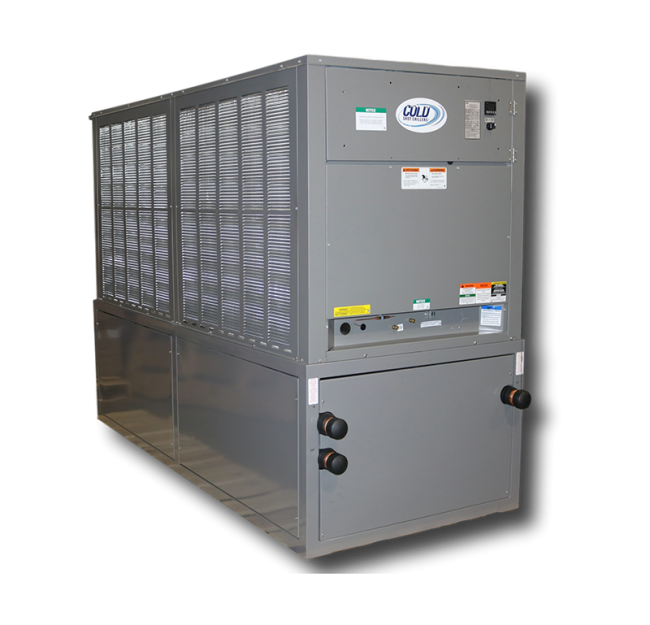
The first loop contains the water or water/glycol mixture that travels through the equipment being cooled.
For example, an injection molding machine may generate heat during production. The circulating fluid absorbs that heat as it passes through the machine and returns to the chiller at a higher temperature.
The fluid itself does not generate cooling. Its job is to carry heat away from the process and back to the evaporator, where that heat can be removed from the system.
This is one reason flow rate is so important. Even a properly sized recirculating water chiller can struggle if insufficient fluid reaches the equipment being cooled. Note: One common mistake is focusing only on fluid temperature while overlooking flow rate. Both are required for effective heat removal.
The Refrigeration Loop
The second loop contains refrigerant. Unlike the process fluid, the refrigerant remains inside the sealed refrigeration circuit.
Inside the evaporator, refrigerant absorbs heat from the returning process fluid. The refrigerant then travels to the compressor, where its pressure and temperature increase. Next, the refrigerant enters the condenser and releases that heat to the surrounding environment.
After passing through the expansion valve, the refrigerant returns to the evaporator and repeats the cycle. The process fluid and refrigerant never mix. Heat is transferred between them through the evaporator heat exchanger.
Water vs. Glycol in a Recirculating Water Chiller
Many systems operate with water alone, while others use a water/glycol mixture. Water typically provides excellent heat transfer and is often the preferred fluid when freeze protection is not needed. Glycol can be added when the chiller operates outdoors, when low fluid temperatures are required, or when freezing could damage piping and equipment.
There is a tradeoff, however. As glycol concentration increases, fluid viscosity also increases. The pump must then work harder to move the fluid, and heat transfer efficiency decreases somewhat. That is why glycol concentration is usually selected based on the operating conditions rather than simply adding as much as possible.
What Temperatures Can a Recirculating Water Chiller Maintain?
Unlike basic cooling systems that depend on outdoor conditions, a recirculating water chiller uses an active refrigeration loop to cool fluid below ambient temperatures. Some processes may only require 70°F fluid. Others may require temperatures near freezing or below when glycol is used.
In many applications, stable temperature is more important than the lowest possible temperature. A process that consistently receives 50°F fluid will often perform better than one that fluctuates several degrees throughout the day.
Recirculating Water Chiller vs. Once-Through Cooling
Before closed loop systems became common, many facilities relied on once-through cooling. In a once-through system, fresh water enters the equipment, absorbs heat, and is discharged. The approach can work, but it can result in high water consumption and limited temperature control. A recirculating water chiller continually reuses the same fluid while removing heat through the refrigeration system.
Closed loop cooling systems are popular in industrial facilities because they allow operators to maintain greater control over temperature, fluid quality, contamination, and freeze protection while reducing water consumption. For processes that depend on repeatable operating conditions, that consistency is more valuable than the water savings alone.
Recirculating Water Chiller vs. Cooling Tower Systems
Cooling towers and recirculating chillers both remove heat, but they do it differently. A cooling tower rejects heat through evaporation. The lowest achievable water temperature depends heavily on outdoor wet bulb conditions. An industrial recirculating chiller uses a refrigeration system to cool the process fluid below ambient conditions. That difference becomes important when a process requires a specific temperature yearround.
For example, maintaining 50°F process fluid is practical with a chiller. A cooling tower alone may not achieve that temperature during warm weather. In some facilities, chillers and cooling towers are used together, with each system serving a different purpose within the overall cooling process.
Need a Recirculating Water Chiller? Contact the Team at Cold Shot.
If you’re researching cooling options for a new process or replacing an older system, Cold Shot Chiller manufacturer can help. Our team works with customers with temperature requirements, heat loads, installation conditions, and other factors that affect chiller performance.
Contact us online to learn more about our water-cooled chillers and air-cooled chillers, or to discuss your application.
