Medical Chillers
Medical Chillers for Imaging and Treatment Equipment
Cold Shot Chillers builds medical chillers for imaging, treatment, and laboratory equipment. Air-cooled and water-cooled systems are available with close temperature control, remote monitoring, and backup city-water cooling options.
Our industrial chillers can support:
- MRI systems
- PET and CT scanners
- Linear accelerators
- Radiotherapy equipment
- Medical laboratories
- Other water-cooled medical equipment
Medical cooling requirements vary by equipment and installation. Complete our brief application questionnaire so our team can review your required temperature, heat load, flow rate, pressure, and backup cooling needs.

How Do Medical Chillers Work?
A medical chiller circulates temperature-controlled water or a water-glycol mixture through connected equipment. The fluid absorbs heat and returns to the chiller, where the evaporator transfers that heat into the refrigerant circuit. The condenser then rejects the heat through ambient air or a separate condenser-water loop.
Medical systems can also include self-diagnostics, remote monitoring, alarms, and automatic city-water backup. Available features depend on the model and equipment requirements.
Why is Temperature Control Important in Medical Facilities?
Medical imaging and treatment equipment can generate heat during use. A medical chiller removes heat from water-cooled components such as cold head compressors, gradient coils, electronics, and power systems. The parts being cooled and their temperature, flow, and pressure limits depend on the equipment manufacturer and model.
In an MRI system, the magnet is maintained near −269°C by a separate cryogenic system. The chiller does not produce this cryogenic temperature. It cools connected support equipment and helps keep it within the manufacturer’s operating limits.
For added backup, some medical chiller systems can be configured to switch to city water if the main cooling circuit fails. This feature can help limit downtime until the chiller is repaired.
Medical Chiller Sizes and Materials
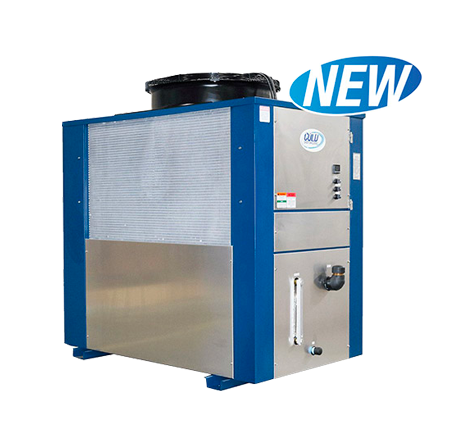
Cold Shot offers medical chillers in several cooling capacities. Available models include 5-ton units rated at 60,000 BTU/hr, 7.5-ton units rated at 90,000 BTU/hr, and larger systems for applications with higher or combined heat loads.
Chiller size depends on the equipment heat load, required fluid temperature, flow rate, pressure, operating schedule, and site conditions. Use our chiller sizing information or contact Cold Shot for help reviewing your application.
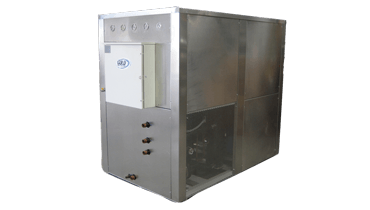
Medical equipment chillers may include stainless steel and copper wetted components with powder-coated steel frames or aluminum panels. Materials vary by model and selected options.
Chiller Systems for Medical Applications
All types of chillers utilized in medical applications are designed to operate within a close temperature tolerance. Precise temperature control is critical for several medical procedures such as medical imaging, laboratory, surgical operations, and more.
MRI Chillers
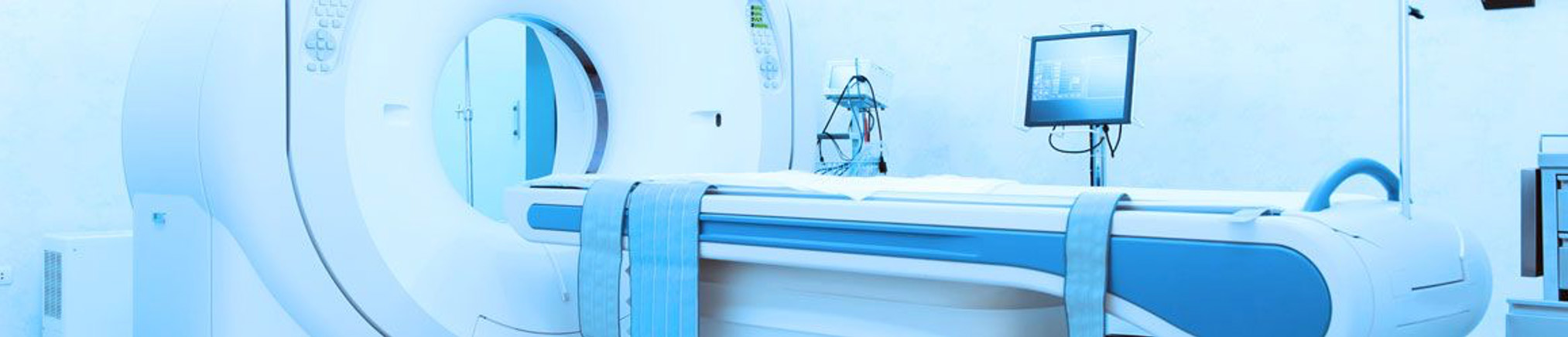
Magnetic resonance imaging systems use powerful magnets and radio waves to create detailed images of organs, soft tissue, the brain, spine, and joints. These systems generate heat in several support components and must remain within the equipment manufacturer’s temperature, flow, and pressure limits.
The Need for Efficient MRI Cooling Systems
An MRI scan consumes a lot of energy and generates considerable heat in its internal components. Therefore, the machine’s temperature must be kept within specified limits to prevent overheating, which can lead to malfunction.
The ideal temperature for an MRI scanner is about -270 °C or -450 °F (a cryogenic temperature). Ambient cooling from an HVAC system installed at the facility cannot provide this close-tolerance temperature for the machine. MRI Chillers & Cooling Systems can reduce the excess heat generated within the device during a scan.
What is an MRI Chiller?
MRI chillers are devices that provide cooling for MRI machines. Some may include built-in self-diagnostic capabilities and integration with preventive maintenance applications. Perhaps most importantly, they can be built to revert to a backup cooling system in case of a mechanical or electrical failure. This ensures that your MRI machine remains cool in the event of an emergency.
Medical chillers built for MRI machines typically need to hold very close temperature tolerances with a very wide heat load variation. The cooling fluid pressures are also high relative to other lifesaving cooling equipment applications. How do medical chillers work to meet these system requirements?
How Cold Shot Chillers® MRI Chillers Work
MRI Chillers & Cooling Systems help to cool the internal components of medical imaging equipment that can generate a significant amount of heat during use. These machines contain a device known as a “cold head” that condenses helium back into its liquid form after cooling the MRI magnet – the component responsible for producing the powerful magnetic fields for resonance imaging.
MRI machine chillers from Cold Shot Chillers® provide close temperature tolerance with automatic city water switchover to ensure maximum uptime in the event of an unexpected failure. In addition, they come fitted with air compressors and refrigerated air dryers for optimum efficiency.
MRI Cooling Specs
Modern medical imaging equipment requires higher than normal pressures and temperature tolerances with extremely wide heat load variations to function efficiently. In addition, since the primary chilling substance in our MRI chillers is eco-friendly chiller refrigerants, they offer greater corrosion resistance than water-based medical chillers.
The main challenge with medical equipment such as MRIs, CT scanners, and PET scanners is that their operation is energy-intensive, with intermittent loads that cause internal components to heat up rapidly. The ideal MRI cooling system must react in time to stabilize internal temperatures at precise levels. Our MRI chillers ensure fast and efficient cooling scanners.
PET and CT Scanner Chillers
Reliability and durability are the most critical factors for selecting medical equipment. Due to the sensitivity of medical procedures, the accuracy of measurements plays a vital role in clinical diagnoses.
Every day, healthcare professionals use electromechanical devices to assist them in their clinical duties. These systems must be operated under proper modes and operating temperatures specified by the manufacturers.
Why Are PET & CT Chiller Systems Important?
Computed Tomography (CT) scan machines are medical imaging equipment that use data from x-rays to produce detailed images of internal body structures. Data from the x-rays are sent to a computer which converts it into a 3-D model displayed on a monitor.
During normal use, the x-ray tubes inside CT scanners tend to heat up considerably (some modern CT systems utilize up to 100kW of power) and require rapid cooling. In scenarios where the cooling from an HVAC system is inadequate, the CT machine may overheat and malfunction. Moreover, excessive heat can cause damage to sensitive components inside the scanner.
To prevent overheating, CT chillers can be used to rapidly cool these scanners. The challenge, however, is that these medical chillers deal with cyclical loads – i.e., the x-ray tubes within the scanner power up intermittently. So, the cooling system must keep internal temperatures stable despite the load surge.
Air-cooled vs. Water-cooled Chillers for PET/CT Cooling
Both air-cooled and water-cooled chillers serve the same purpose: to cool an enclosure. However, they differ in the mode of operation. Here’s how both systems work:
Air-cooled
In an air-cooled system, the heat is rejected by ambient air through the rotation of cooling fans. These fans are usually located at the top of the unit for optimal cooling. Air-cooled chillers are ideal for medical facilities with no cooling towers or a limited water supply.
The following are the main benefits of using an air-cooled chiller at your facility:
- They are generally cheaper to use than water-cooled systems due to the absence of a cooling water tower.
- They require less maintenance than open-loop systems.
- Air-cooled systems help reduce water consumption.
Water-cooled
Water-cooled chillers use chilled water from a tower or city water supply to reject heat from a refrigerant used to cool a process. The hot fluid is then recirculated into the system for reuse. However, they are generally more expensive to install and maintain than air-cooled chillers as they require a dedicated water chiller plant for 24/7 cooling.
The following are the main benefits of using a water-cooled chiller at your facility:
- Water-cooled medical chillers are generally more energy-efficient than air-cooled systems.
- They ensure quiet operation (no noise generated from cooling tower fans).
Water-cooled medical chillers facilitate stable operation with infrequent replacements of parts.
What are the Benefits of Medical Chillers?
Can Cold Shot Chillers® medical chillers reduce cost or ensure a longer-lasting machine?
Some medical equipment uses city water as its main cooling source. This arrangement can increase water use and may allow mineral deposits to form when water quality is not properly managed. A closed-loop air-cooled chiller recirculates process fluid and rejects absorbed heat into the surrounding air, reducing reliance on once-through city water.
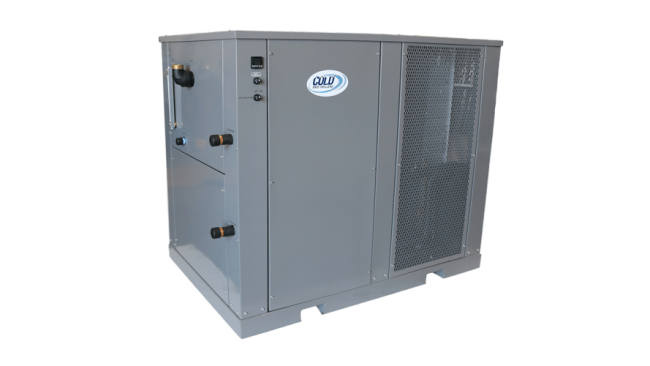
ACWC-90-ESUS and ACWC-90-DM medical process chillers from Cold Shot Chillers® are air-cooled with auxiliary cooling systems to compensate in the event of mechanical failure. In addition, they help conserve water and prevent system failures due to ground or city water use.
For more relevant information and technical specifications, refer to our ACWC-90-ESUS and ACWC-90-DM spec sheets.

Why Cold Shot Chillers® Medical Chillers?
For decades, Cold Shot Chillers® has designed high-capacity medical chillers with close temperature tolerance and rugged reliability.
Here are some benefits of using our medical equipment chillers at your facility:
- Premium Materials: Our medical imaging equipment chillers are built using premium-grade materials. Every product is quality-assured and offered with a competitive limited warranty.
- Superior Reliability: Our medical chillers are designed to ensure minimal downtime. They are designed with built-in features that compensate for equipment failure.
- Water-conserving Options: Air-cooled medical chillers reject heat without a cooling tower, which can reduce condenser-water use at the facility.
- Custom-built Medical Chillers: Do you need a chiller for an MRI machine, CT scanner, or blood bank? Whatever your application, we have got you covered with various custom medical chiller designs to suit your needs.
- Customer-first Service: Whether you need technical assistance with one of our products or you wish to request a quote, our customer support channels are open 24/7 to cater to you. We offer same-day quotes, sometimes in as little as 30 minutes!
Please contact us today for a custom quote on our industrial chillers.


Request a Quote
Request a Quote (Footer Form)
Request a Quote