Cooling Load Calculation for Chillers: Formula and Example
What is a Cooling Load Calculation?
A cooling load calculation defines how much heat must be removed from a process to keep temperature stable. It accounts for all heat entering the system, not just what you expect.
This calculation is the starting point for chiller selection. A proper cooling load calculation removes estimation and ties system performance to real operating conditions. It also assumes steady operation, so startup spikes or batch processes may need to be reviewed separately. The cooling load represents steady heat during normal operation, while peak load reflects worst-case conditions such as startup or hot ambient periods. The added margin is extra capacity applied to account for these conditions and for uncertainty in real operation.
Cooling Load Calculation Formula
In practice, the steps are simple: get the flow and temperatures, calculate the process heat, add other heat sources, apply margin, then convert the result into required cooling capacity.
This is the most common formula used for liquid cooling systems:
Cooling Load (BTU/hr) = Flow Rate (GPM) × 500 × ΔT
Where:
- GPM = gallons per minute
- 500 = constant for water
- ΔT = temperature rise across the process (°F)
For metric systems:
Cooling Load (kW) = Flow (L/s) × 4.186 × ΔT (°C)
This is the core cooling load calculation formula used for chiller sizing. The 500 constant assumes water at typical conditions, so results will change if glycol is used or if fluid properties differ.
Cooling Load Calculation Example
Let’s run a real example.
- Flow rate: 20 GPM
- Inlet temp: 55°F
- Outlet temp: 65°F
ΔT = 10°F
20 × 500 × 10 = 100,000 BTU/hr
To convert BTU/hr to tons:
100,000 ÷ 12,000 = 8.3 tons
This same load is roughly 29 kW of cooling capacity, converted from BTU/hr, which can be useful when comparing systems or reviewing electrical data.
This result represents the minimum cooling required. In real systems, the temperature rise is often smaller than expected, which increases flow demand and puts more load on the chiller. Margin is added later for that reason.
Once the cooling load is known, it can be converted into equipment size using a chiller sizing calculator.
Total Cooling Load
Process heat comes from the work being done, and ambient heat comes from the surrounding environment. These sources make up the total load seen by the chiller.
Combine all sources:
- process heat
- ambient heat gain
After these are combined, add 10-25% margin. The lower end applies to stable indoor processes. The higher end is more common when ambient conditions vary, heat exchangers foul over time, or future changes are likely.
The final number represents what the chiller needs to handle under real operating conditions.

Don’t Make These Mistakes
Most industrial cooling failures are the result of:
- guessing instead of calculating
- using peak flow instead of real flow
- ignoring ambient heat
- overlooking additional heat entering the process
- no safety margin
Why This Matters for Chillers
An industrial chiller can only remove the heat it is sized for. If the cooling load is low, the system will run continuously, have trouble reaching setpoint, or cycle harder than intended. Over time, this shortens component life.
A correct cooling load calculation lets the water chiller operate in its efficient range. It stabilizes process temperature, reduces run hours, and protects compressors and pumps. In the field, calculated loads are often checked by measuring inlet and outlet temperatures, confirming actual flow, and observing system behavior during full production. If measured data does not align with the calculation, the load assumptions should be reviewed.
Quick Checklist Before You Size a Chiller
- known flow rate
- real ΔT
- all heat sources counted
- margin added
If one is missing, the result will be wrong.
Explore Cold Shot Chillers’ Options
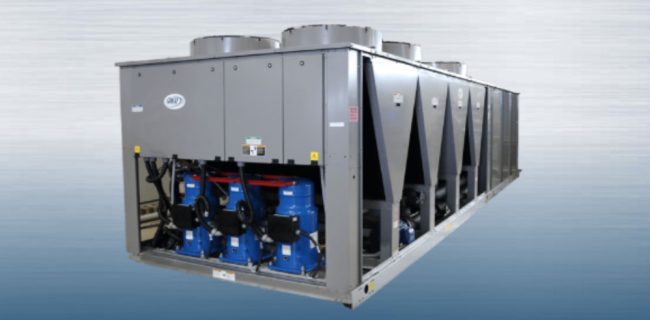
If you need help applying a cooling load calculation to a real system, an industrial chiller manufacturer can assist with equipment selection based on flow, temperature, fluid type, operating conditions, etc. The team at Cold Shot Chillers works from actual load data to recommend chiller sizes that will hold temperature during normal operation.
For questions about sizing/selecting an industrial cooling system for your process, contact Cold Shot Chillers to discuss more.